


By using our website, you agree to the use of cookies as described in our Cookie Policy
How Far Offshore Do Fishing Charters from Gulfport Go?
Most anglers assume offshore fishing is just about the distance. Miles out, miles back. But Gulfport charter captains see more than that — and if you don't, you're missing the whole picture. Distance isn't just a number on a GPS. It's about what swims where, how long you've got, and whether you're ready for what's waiting out there.
Here's the reality. If you're booking a charter to chase something worth bragging about, great. Just don't treat every trip like it's the same water. Every mile matters. Every target species has its zone. And every decision about how far to go should be grounded in what you actually want to reel in — not just how it sounds at the dock.
The Gulf Has Zones, Not Just Open Water
Gulfport sits on a coast that offers layers. You're not picking between "close" and "far." You're choosing between ecosystems. The shallows near shore hold structure and ambush predators. The mid-range reefs stack baitfish and bottom feeders. The deep blue beyond that? That's where the big runners live.
Charters break trips into three basic ranges, and each one fishes differently. Inshore means you're working the bays and marshes, usually within sight of land. Nearshore pushes out to artificial reefs and wrecks a few miles off the beach. Offshore fishing — the real deal — takes you into open Gulf water where the bottom drops and the game changes completely.
What Inshore and Nearshore Actually Mean
Inshore fishing trips stick to the first few miles of coastline. We're talking one to three miles out, max. These charters target the flats, grass beds, and channels where reds, trout, and flounder patrol. It's productive water, especially for families or anyone new to saltwater fishing. You're back at the dock in a few hours, and you've still got fish in the cooler.
Nearshore charters push the envelope a bit. They'll run you out six to nine miles, chasing structure like reefs, wrecks, and drop-offs. That's where snapper stack up, grouper hole up, and kings cruise the current lines. The ride's longer, but the variety's worth it. You're not committed to a full day, but you're also not stuck in the shallows.
Offshore Runs Start Around Twenty Miles
Real offshore fishing from Gulfport begins when you clear ten miles and keep going. Most half-day offshore charters run between ten and twenty miles out. That's enough distance to hit deeper structure and target bigger species — amberjack, larger snapper, sharks, and the occasional mahi that wanders in.
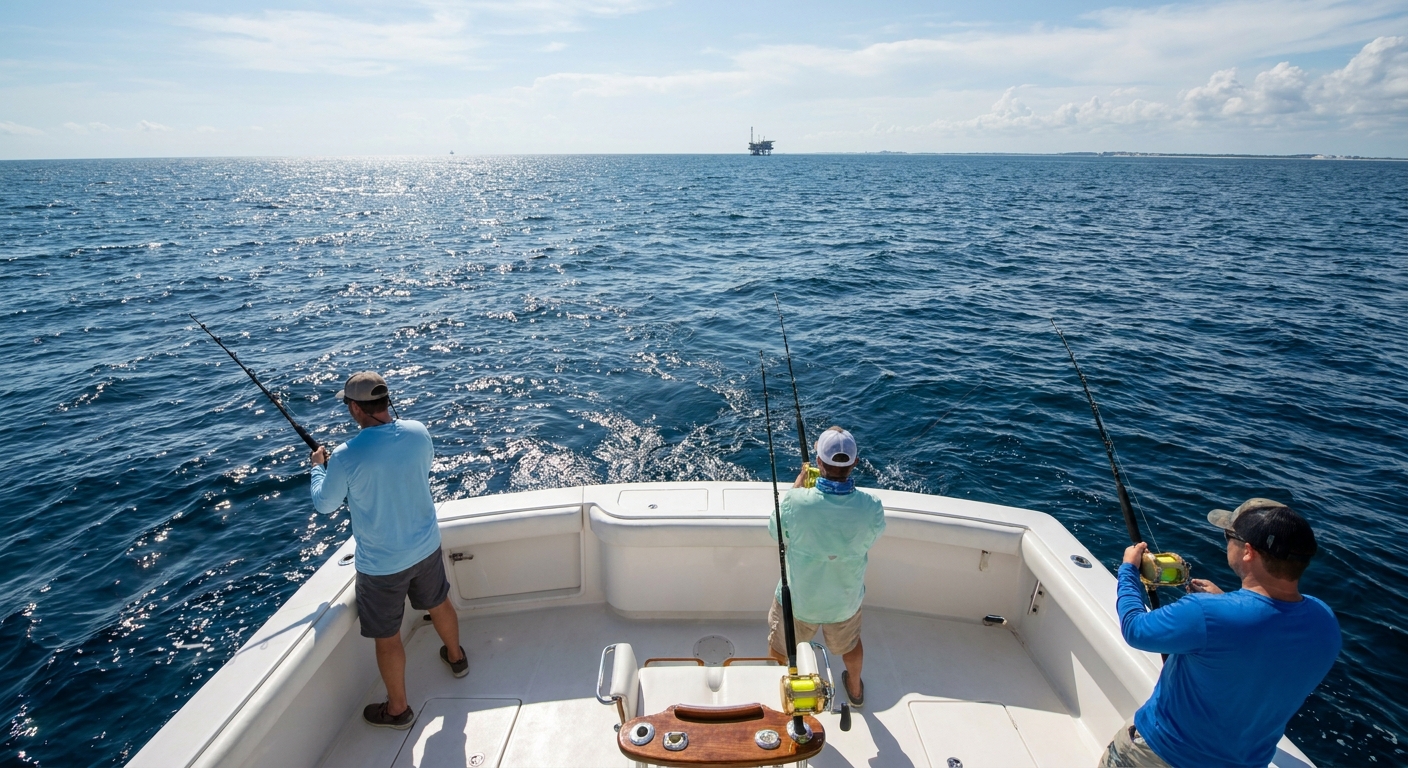
Full-day trips stretch that to forty or sixty miles. At that range, you're reaching the rigs, the deepwater ledges, and the blue water where tuna, wahoo, and billfish roam. Some captains will push past sixty if conditions are right and the bite's been good. Those are extended offshore fishing trips where coolers get heavy and stories get told for years.
Target Species Determine the Distance
Want to know how far you'll go? Tell your captain what you want to catch. The Gulf doesn't stack everything in one spot, and serious charters don't guess.
- Redfish, trout, and flounder live close — one to three miles keeps you in their lane
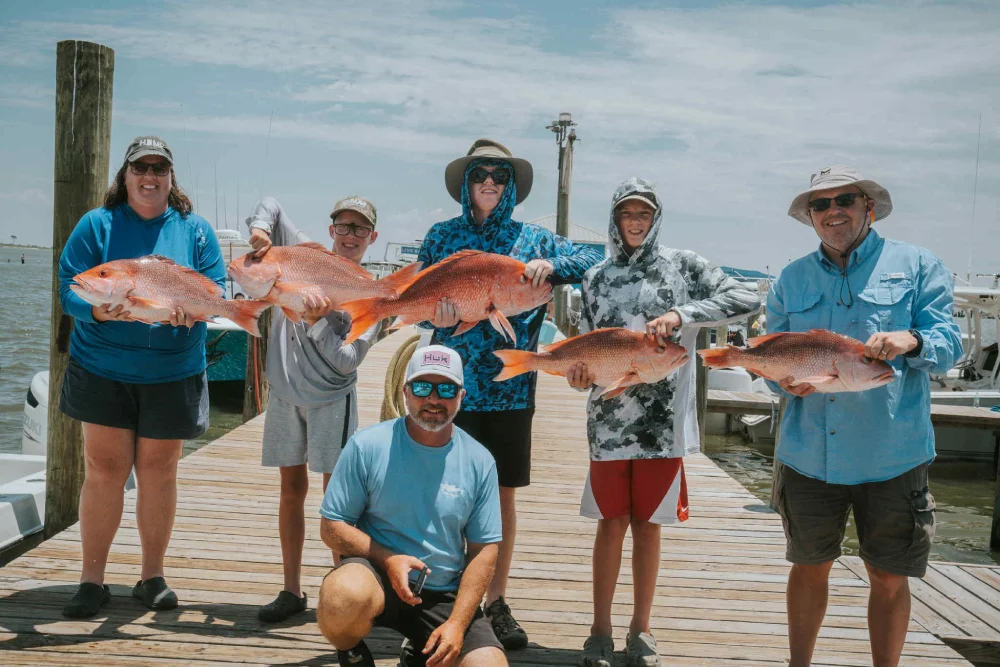
- Snapper, grouper, and mackerel hang around structure — six to nine miles hits the sweet spot
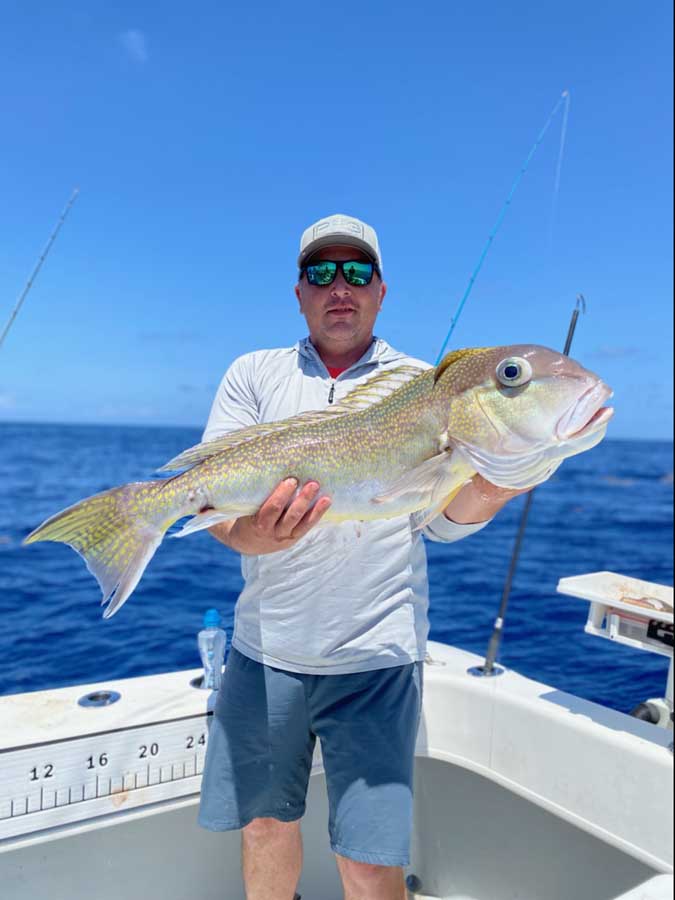
- Amberjack and bigger reef fish start showing up ten to thirty miles out
- Tuna, mahi, wahoo, and billfish require the deep run — thirty miles minimum, often fifty-plus
- Swordfish and specialized pelagics mean overnight trips and serious offshore commitment
Trip Length Decides How Far You Can Push
You can't fish sixty miles out on a four-hour trip. The math doesn't work. A half-day charter gives you maybe ten to twenty miles of reach if you want actual fishing time. Full-day trips open up the deeper water because you've got eight to ten hours to work with.
Overnight charters are where distance stops being a limiting factor. Captains can run you out to the rigs, set up on structure, and fish multiple spots without worrying about the clock. Those trips are for anglers who want access to the best zones, not just the closest ones.
Conditions Change the Plan Fast
Even if you book a sixty-mile run, weather can pull you back. Gulf conditions shift, and smart captains adjust. Rough seas farther out mean you're fishing closer reefs instead. A good captain won't waste your time or risk your safety just to hit a waypoint.
Seasons matter too. Summer brings calmer water and pelagics closer to shore. Winter spreads the fleet out as captains chase moving fish and avoid cold fronts. Spring and fall sit in between, with solid action at most ranges depending on what's biting.
What You Should Ask Before You Book
Don't just ask how far offshore a charter goes. Ask why. A good operation will explain what they're targeting, where those fish are right now, and what kind of trip gives you the best shot at success.
- What species are biting at different ranges this week?
- How much travel time versus fishing time should we expect?
- What's included in the trip — tackle, bait, cleaning, licenses?
- How many anglers can the boat handle comfortably?
- What's the cancellation or rescheduling policy if weather turns?
Experience Level Shapes the Right Distance
First-timers don't need to run sixty miles to have a great trip. Nearshore charters offer plenty of action without the long ride or the rougher water. Kids, beginners, and casual groups often have more fun closer in where the fishing's steady and the seas are calmer.
Experienced anglers looking for trophy fish or specific species? That's when the deep runs pay off. If you know what you're doing and you've got the time, pushing offshore gives you access to fish that most weekend warriors never see.
Costs Scale With Distance and Duration
Shorter trips cost less because they burn less fuel and take less time. Inshore and nearshore charters are budget-friendly and still productive. Offshore charters cost more — sometimes a lot more — because of fuel, crew time, and the heavier gear required.
If you're splitting the cost across a group, the per-person price drops fast. A full-day offshore trip with six anglers isn't cheap, but it's also not outrageous when you divide it up and factor in what you're getting.
Communication With Your Captain Matters
The best charters start with a conversation, not a credit card. Tell your captain what you want. Be honest about your experience. Ask about realistic expectations for the season and conditions. A good captain will steer you toward the trip that actually matches your goals.
- What's your target species or dream catch?
- How much time do you have on the water?
- What's your comfort level with rough seas or long rides?
- Are you fishing for dinner, trophies, or just the experience?
- Do you want to learn techniques or just relax and let the crew handle it?
Gulfport's Fleet Knows the Water
Gulfport charters run these routes year-round. Captains know where the fish are stacking, which rigs are producing, and what's been biting at each range. They're not guessing. They're working intel from other boats, tracking conditions, and adjusting daily.
That local knowledge is what separates a good trip from a great one. You're not just paying for a boat ride. You're paying for someone who knows exactly how far to go — and why. When you're ready to experience professional fishing charters with experienced local captains, you'll understand the difference that expertise makes on the water.
Ready to Plan Your Offshore Adventure?
We know every angler wants a trip that matches their goals, whether it's a quick inshore run or a deep offshore chase. Let's talk about what you want to catch and craft a charter that gets you there safely and successfully. Give us a call at 662-571-5785 or book now today to start planning your next Gulfport fishing experience together.
‹ Back
Recent Posts
-
-
Can Beginners Enjoy a Fishing Charter in Gulfport?
September 25, 2026
-
Should You Book a Half-Day or Full-Day Fishing Charter in Biloxi?
September 11, 2026
-
How Far Offshore Do Fishing Charters from Gulfport Go?
August 28, 2026
-
Can You Catch Different Fish Every Season Around Biloxi?
August 14, 2026